


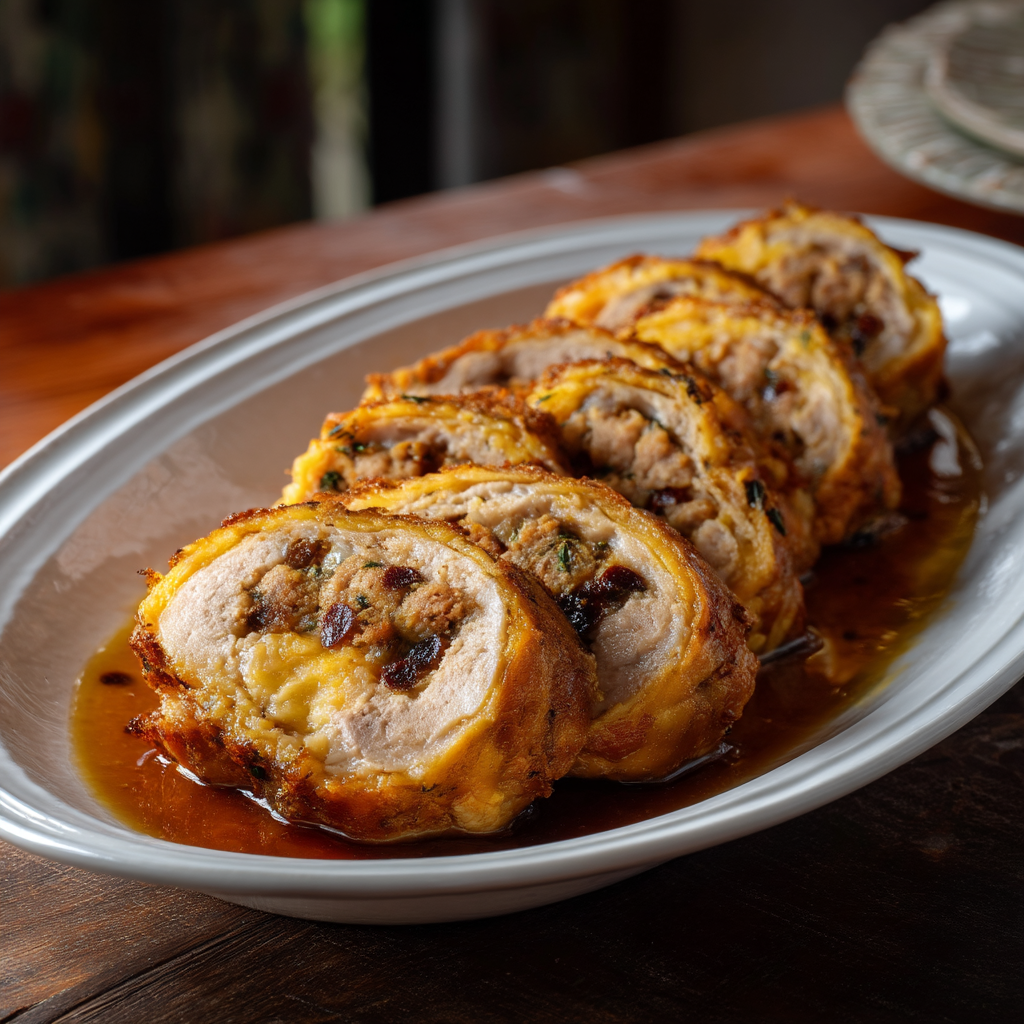
Kapampangan Morcon Recipe: Caul-Wrapped Ground Meat Roll, Fiesta Style
Recipe Overview
Dish Name: Authentic Kapampangan Morcon with Caul Fat and Chorizo
Cuisine: Kapampangan | Category: Meat Course | Serves: 4
Prep Time: 45 minutes | Cook Time: 90 minutes | Total Time: 2 hours 15 minutes
Why This Works
This Kapampangan morcon recipe represents Pampanga’s culinary heritage in its purest form. Most online recipes show the beef roulade version, but in Pampanga itself, morcon means something different: seasoned ground pork and beef studded with chorizo, raisins, and cheese, wrapped in delicate caul fat that renders into a crispy, lacy exterior during cooking.
The ground meat mixture absorbs aromatics more completely than sliced beef ever could. Caul fat bastes the filling continuously as it melts, producing meat that stays impossibly moist while developing a crackling surface. Duck egg yolks enrich the mixture with deeper color and fattier mouthfeel than chicken eggs provide.
This is a Pampanga fiesta dish meant for celebration. The four-hour cooking time your grandmother accepted has been reduced to 90 minutes through proper steaming technique, making this achievable for modern home cooks without sacrificing the slow-cooked depth that defines the dish.
Ingredients (Serves 4)
For the Meat Filling:
- 400g ground pork, 20% fat content preferred
- 200g ground beef, not too lean
- 100g chorizo de Bilbao, casing removed, finely diced
- 3 duck egg yolks (or 4 chicken egg yolks)
- 60g raisins, roughly chopped
- 50g aged cheddar or Edam cheese, grated
- 1 medium white onion, minced fine
- 4 cloves garlic, minced
- 2 Roma tomatoes, seeded and diced small
- 1 tablespoon fish sauce
- 1 teaspoon freshly ground black pepper
- 1/2 teaspoon fine sea salt
For the Wrapper:
- 300g pork caul fat (tela ng baboy), soaked in warm salted water
For the Braising Sauce:
- 500ml beef or pork stock
- 60ml soy sauce
- 30ml calamansi juice (or 2 tablespoons lemon juice plus 1 tablespoon orange juice)
- 2 tablespoons tomato paste
- 1 fresh bay leaf
- 1 tablespoon brown sugar
- 2 tablespoons neutral oil
For Finishing:
- 2 tablespoons cornstarch mixed with 3 tablespoons cold water
- Fresh dayap or calamansi wedges for serving
Method
Mise en Place (20 minutes)
Gather a large mixing bowl, steamer setup (bamboo or metal steamer over wok or large pot), heavy-bottomed braising pan or Dutch oven, kitchen twine, and aluminum foil.
Soak the caul fat in warm water with a teaspoon of salt for 15 minutes. This softens the membrane and removes any residual odor. Gently unfold and spread on a clean work surface. The fat should be translucent and pliable without tears.
Prepare all filling ingredients before mixing. The chorizo must be diced fine enough to distribute evenly throughout the meat mixture.
How to Make Kapampangan Morcon: Building the Filling (10 minutes)
Combine ground pork and beef in a large bowl. Add the duck egg yolks and mix with your hands until the yolks are fully incorporated. The mixture should become slightly sticky and cohesive.
Add minced onion, garlic, tomatoes, chorizo, raisins, and grated cheese. Season with fish sauce, black pepper, and salt. Mix thoroughly for 2 minutes until the filling holds together when squeezed. The fat from the chorizo and cheese should create visible marbling throughout.
Divide the mixture into two equal portions. Each roll will weigh approximately 450g before wrapping.
Wrapping in Caul Fat (10 minutes)
Cut the caul fat into two pieces, each roughly 30cm x 25cm. The fat has a natural web pattern with thicker and thinner sections. Position thicker sections toward the center where they provide more protection.
Place one portion of meat mixture along the bottom edge of the caul fat, shaping it into a log approximately 20cm long and 6cm in diameter. Roll the caul fat over the meat, tucking in the sides as you go, similar to rolling a burrito. The fat should wrap around the meat at least twice.
Tie each end with kitchen twine, then make 3 loops around the body at even intervals to maintain the cylindrical shape during cooking. Repeat with the second portion.
Steaming the Morcon (45 minutes)
Wrap each roll loosely in aluminum foil, leaving the ends slightly open for steam circulation. This prevents the caul fat from sticking to the steamer while allowing moisture to penetrate.
Bring water in your steamer base to a rolling boil. Place the wrapped morcon on the steamer rack, ensuring they do not touch. Steam over high heat for 45 minutes. The internal temperature must reach 74°C for food safety.
Remove from steamer and let rest in foil for 10 minutes. The rolls will firm up as they cool slightly, making them easier to handle for the braising step.
Preparing the Braising Sauce (5 minutes)
While the morcon steams, combine beef stock, soy sauce, calamansi juice, tomato paste, and brown sugar in a bowl. Whisk until the tomato paste dissolves completely.
This sauce provides the balance that defines Kapampangan cooking: salty from soy and fish sauce, sour from calamansi, sweet from sugar and raisins, and deep umami from the stock.
Searing and Braising (25 minutes)
Remove the foil and twine from the steamed morcon. The caul fat should appear set and slightly translucent.
Heat oil in a heavy-bottomed pan over medium-high heat. When the oil shimmers, add the morcon rolls. Sear for 2 minutes per side, rotating to brown the entire surface. The caul fat will render and crisp, developing a golden, lacy texture. Transfer to a plate.
Pour off excess fat, leaving about 1 tablespoon in the pan. Add the braising sauce and bay leaf, scraping up any browned bits. Return the morcon to the pan, reduce heat to medium-low, and braise for 15 minutes, turning the rolls every 5 minutes to coat evenly.
Finishing the Sauce (5 minutes)
Remove the morcon from the pan and let rest on a cutting board for 5 minutes. The resting period allows juices to redistribute.
Increase heat to medium-high and bring the braising liquid to a simmer. Stir the cornstarch slurry and add it to the pan in a steady stream while whisking. Cook for 2 minutes until the sauce coats the back of a spoon. Taste and adjust seasoning with additional fish sauce if needed.
Slicing and Plating
Use a sharp knife to cut the morcon into rounds approximately 2cm thick. The filling should reveal a mosaic of chorizo, raisins, and cheese suspended in the seasoned meat.
Arrange slices on a warm platter, overlapping slightly. Spoon the thickened sauce generously over the top. Serve immediately with steamed rice and calamansi wedges.
What You Need to Know
What is the difference between morcon and embutido? In Kapampangan cooking, the terminology reverses from standard Filipino usage. What Manila calls morcon (beef roulade) is called embutido in Pampanga. What Pampanga calls morcon (ground meat in caul fat) resembles what Manila calls embutido. This recipe follows the authentic Kapampangan tradition.
Why is Kapampangan morcon different? The caul fat wrapper creates two distinct advantages. First, it bastes the meat continuously as the fat renders, keeping the filling moist despite extended cooking. Second, when seared, it develops a crispy lattice texture impossible to achieve with standard morcon wrapped in foil or plastic.
Critical technique: Do not skip the steaming step before braising. Steaming sets the meat proteins gently and renders excess fat from the caul fat wrapper. Braising alone would cause the wrapper to melt too quickly, leaving the filling exposed and dry.
Make-ahead option: The morcon can be steamed, cooled, wrapped in plastic, and refrigerated for up to 2 days. Bring to room temperature for 30 minutes before searing and braising.
The Result
Each slice reveals the internal architecture: the pink-tinged meat from the chorizo, pockets of melted cheese, jewel-like raisins, all held together by the seasoned ground meat matrix. The exterior presents a golden, crackling surface where the caul fat has rendered to paper-thin crispness.
The first bite delivers the sweet-savory-sour balance that characterizes Pampanga cooking. Chorizo provides smoke and paprika depth. Raisins offer unexpected sweetness against the umami-rich meat. The sauce ties everything together with its glossy, tangy coating.
You have nailed it when the meat stays moist and tender while the caul fat exterior shatters slightly under your fork.
Nutrition Information Based on a 2,000 Calorie Diet (Per Serving)
| Nutrient | Amount | % Daily Value |
|---|---|---|
| Calories | 685 kcal | 34% |
| Total Fat | 48g | 62% |
| Saturated Fat | 18g | 90% |
| Cholesterol | 245mg | 82% |
| Sodium | 1,180mg | 51% |
| Total Carbohydrates | 18g | 7% |
| Dietary Fiber | 1g | 4% |
| Total Sugars | 11g | N/A |
| Protein | 42g | 84% |
| Vitamin A | 185mcg | 21% |
| Vitamin C | 12mg | 13% |
| Calcium | 145mg | 11% |
| Iron | 4.2mg | 23% |
| Potassium | 620mg | 13% |
Flavor Balance
Sweet (5/10): Raisins and brown sugar in the braising sauce provide measured sweetness that counters the salt and acid. The chorizo contributes subtle caramelized sugar notes from its curing process.
Salty (6/10): Fish sauce, soy sauce, and chorizo deliver layered salinity. Each contributes a different salt character: fermented depth from fish sauce, rounded soy notes, and cured meat intensity from chorizo.
Sour (5/10): Calamansi juice in the sauce provides the brightness essential to Kapampangan cuisine. The acidity cuts through the richness of the fatty pork and rendered caul fat.
Bitter (2/10): Minimal bitterness appears from the bay leaf and the slight char developed during searing. This restraint is intentional, allowing other flavors to dominate.
Umami (8/10): The dominant flavor driver. Ground pork, beef, fish sauce, soy sauce, cheese, and stock create overlapping umami layers. The long steaming and braising extracts maximum savory depth.
Wine Pairing
Recommended: Barossa Valley Shiraz, Australia
Why: This pairing works through complementary intensity. Barossa Shiraz brings dark fruit concentration, pepper spice, and enough tannin structure to stand up to the rich, fatty pork without being overwhelmed. The wine’s characteristic smoky, almost meaty quality echoes the chorizo in the filling. Moderate acidity in Australian Shiraz cuts through the rendered caul fat and rich sauce, cleansing the palate between bites. The slight sweetness common in riper Barossa expressions harmonizes with the raisins and brown sugar in the braising liquid. Serve at 16 to 18°C to preserve fruit expression while allowing tannins to soften.
Alternatives:
McLaren Vale Grenache: This lighter-bodied option offers juicy red fruit and white pepper notes that complement rather than compete with the dish. Grenache’s naturally lower tannins work well with the fatty richness of the caul fat wrapper. The variety’s inherent spice character bridges to the chorizo, while bright acidity provides palate refreshment. Choose a medium-bodied example without heavy oak influence.
Adelaide Hills Pinot Noir: For those preferring elegance over power, a cool-climate Australian Pinot brings red cherry, earth, and subtle gaminess that pairs surprisingly well with ground pork. The wine’s acidity matches the calamansi brightness in the sauce. This pairing strategy uses contrast: the wine’s finesse against the dish’s richness, creating a more refined dining experience. Select a producer with minimal new oak to avoid overwhelming the delicate Pinot fruit.
HACCP-Compliant Storage and Safety
Safe Cooling: After cooking, cool the morcon to below 21°C within 2 hours, then to below 5°C within an additional 4 hours. Cut into portions before cooling to accelerate temperature reduction. Do not leave at room temperature for more than 2 hours total.
Refrigeration: Store cooked morcon in airtight containers at 0 to 4°C for a maximum of 3 days. Keep sauce in a separate container to prevent the caul fat from becoming soggy.
Freezing: Wrap individual portions tightly in plastic wrap, then aluminum foil. Freeze at -18°C or below for up to 2 months. Sauce freezes separately in sealed containers for the same duration. Label with date of preparation.
Reheating: Thaw frozen morcon in the refrigerator overnight, never at room temperature. Reheat to an internal temperature of 74°C. For best results, reheat slices in the sauce over medium heat until bubbling. Microwave reheating is acceptable but will soften the caul fat exterior.
Disposal Guidance: Discard any cooked morcon held above 5°C for more than 2 hours, or any product showing visible mold, off-odors, or slimy texture. When in doubt, discard.
Raw Meat Handling: Wash hands, cutting boards, and utensils with hot soapy water after contact with raw pork and beef. The internal temperature of the steamed morcon must reach 74°C before proceeding to the braising step.
